
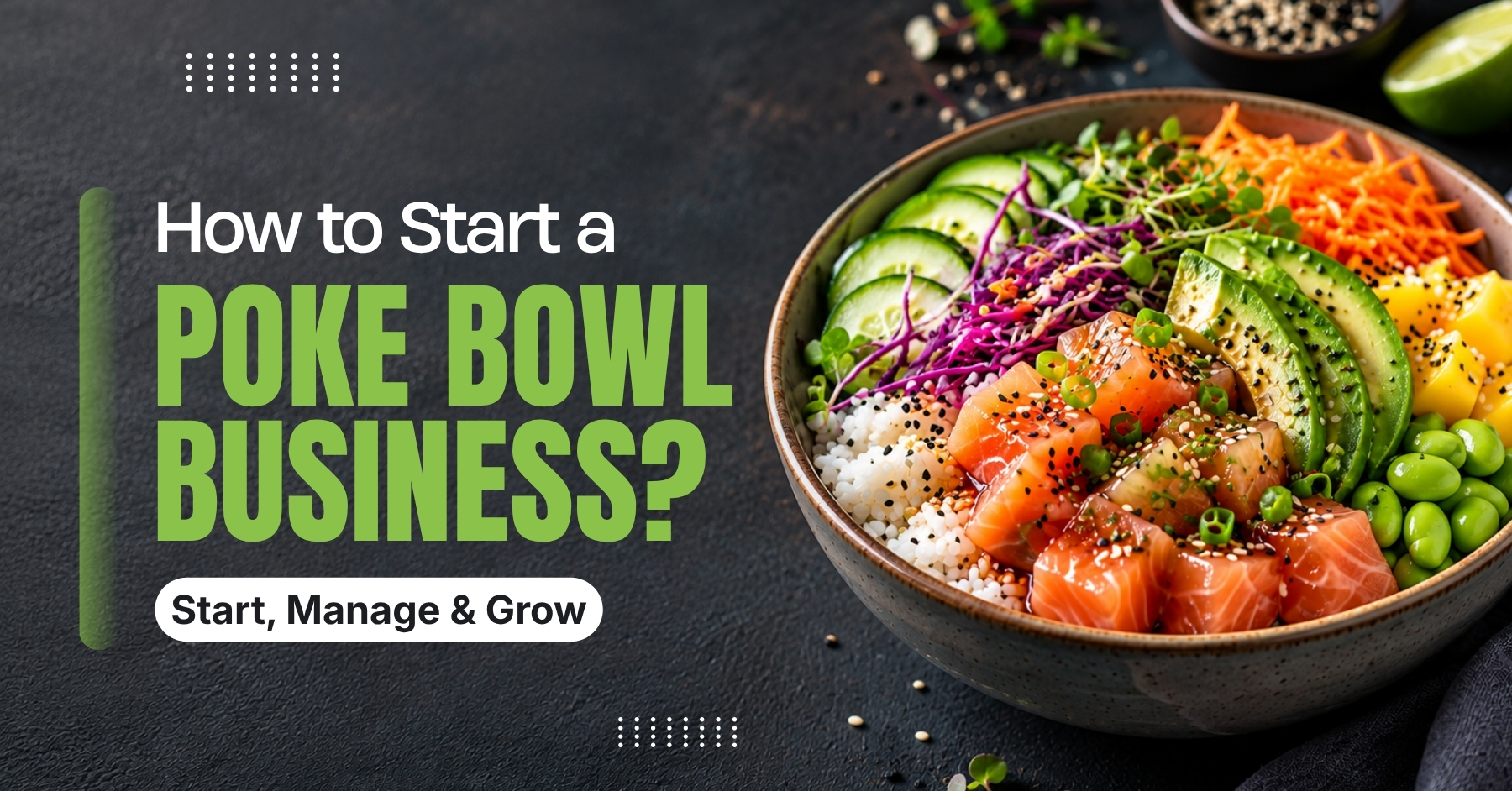
Welcome to the lovely world of Poke Bowls, where fresh ingredients, bold flavors, and culinary genius perform a delightful dance for your taste senses. How to start a poke bowl business? To begin a Poke Bowl business, you should create an experience that takes your clients to a tropical place with each taste.
In this guide, we’ll walk you through building an experience suited to your area, developing standout dishes, and sourcing quality ingredients. In this way, we should jump into the delightful universe of Poke bowls and figure out how to launch a profitable business that gives clients a taste of the tropics.
Summary: Starting a poke bowl business requires careful planning, reliable suppliers, proper food safety, a suitable location, and controlled operating costs. Focus on menu quality, efficient service, effective marketing, and customer retention. With the right strategy, the business can grow through delivery, catering, partnerships, and additional locations.
Understanding the Poke Bowl Business Concept
The idea comes from the Hawaiian dish poke (pronounced poh-keh), which traditionally consists of diced fish seasoned with salt, seaweed, and soy-based sauces. Modern restaurants have adapted it into a scalable restaurant model that blends sushi, salad bars, and quick-service dining into one efficient format.
A poke bowl business is a fast-casual food concept built around serving customizable bowls made with fresh ingredients — typically rice or greens, raw or cooked protein, vegetables, toppings, and sauces. Customers usually move along a service counter (similar to a salad or burrito bar) and build their meal step-by-step, choosing exactly what they want.
What Makes This Business Popular?
The poke bowl business fits perfectly into modern eating habits:
- Customers want healthy fast food
- People prefer customizable meals
- Quick service suits busy lifestyles
- Fresh ingredients feel premium but approachable
- Visually appealing meals drive social media sharing
It also benefits owners because it avoids complicated cooking processes — no deep frying, heavy grilling lines, or large kitchens required.
What Makes It Different From Other Food Businesses?
| Poke Bowl Shop | Traditional Restaurant |
| Assembly-based | Cooking-based |
| Fast service | Longer wait times |
| Smaller kitchen | Large kitchen required |
| Lower staff skill level | Skilled chefs needed |
| High lunch demand | Dinner dependent |
Is a Poke Bowl Business Profitable?
Yes — a poke bowl business can be profitable when managed correctly, but profitability depends on factors such as food costs, labor, rent, pricing, sales volume, and operating efficiency. The reason is simple: high perceived value + low cooking complexity + customizable pricing.
Customers view poke as a premium, healthy meal, so they’re willing to pay more than typical fast food — yet the actual ingredient and labor costs remain relatively controlled.
Average Profit Margins
Profitability depends heavily on portion control and ingredient sourcing, but typical industry ranges look like this:
| Metric | Typical Range |
| Food cost | 28% – 40% |
| Labor cost | 25% – 32% |
| Gross margin | 60% – 72% |
| Net profit margin | 3%–5% |
A well-run small poke shop can have some operational advantages over burger or fried food restaurants because:
- No deep frying oil costs
- Fewer cooks required
- Faster service turnover
- Lower equipment maintenance
Example Pricing Structure
Most shops follow a base price + add-ons model, which significantly boosts profits.
Standard Bowl
- Customer picks one protein and toppings
- Mid-range price point
Premium Bowl
- Salmon/tuna combination
- Specialty toppings
- Higher price point
Upsell Add-Ons
- Extra protein
- Avocado
- Premium sauces
- Drinks & desserts
Add-ons can increase the average order value and provide another opportunity to improve profit.
Major Factors That Affect Profit
The following factors directly impact your poke bowl business profit.
1. Food Cost Control
Fish is the biggest expense. Profit depends on:
- Consistent portion sizes
- Daily inventory tracking
- Using mix-and-match proteins (e.g., tuna + tofu options)
2. Location Rent
- Rent is a major fixed cost, and an expensive location can reduce profitability even when sales are strong.
3. Speed of Service
The faster you serve customers:
- The more bowls per hour
- The higher daily revenue
- The lower labor cost per order
4. Menu Simplicity
More ingredients = more waste.
Successful shops limit toppings but offer creative combinations.
Break-Even Timeline
Estimated operating break-even period:
| Setup Type | Estimated Break-Even Time |
| Cloud kitchen | 3-6 months |
| Small shop | 6-14 months |
| Full restaurant | 12-24 months |
These are estimated ranges, not based on verified industry data for this business type. Actual break-even time depends on startup costs, sales volume, pricing, food and labor costs, rent, and other operating expenses.
Realistic Daily Sales Example
Small takeaway shop:
- Average bowl price: $9
- Daily customers: 90
- Daily revenue: $810
- Monthly revenue: ~$24,000
This shows how daily volume affects monthly revenue — actual profit depends on food, labor, and rent costs.
Why Start a Poke Bowl Business?
A Poke Bowl business can be a flexible food concept because it combines a focused menu with customization and different ways to serve customers.
- Simple Service Model: Customers build their bowls from a selection of bases, proteins, toppings, and sauces.
- Flexible Business Formats: You can operate a small shop, takeaway counter, food truck, cloud kitchen, or franchise.
- Delivery-Friendly Menu: Bowls can be prepared for takeaway and delivery without requiring a traditional full-service restaurant.
- Multiple Revenue Opportunities: In addition to bowls, businesses can offer add-ons, catering, drinks, and packaged products.
- Room for Brand Differentiation: Ingredients, sauces, bowl combinations, branding, and service style can help create a distinct concept.
The right business model, location, pricing, food costs, and daily sales volume will ultimately determine whether the concept is profitable.
Starting a Poke Bowl Business | Step-By-Step Guide
A fruitful poke bowl set up requires cautious preparation and execution.
Step 1: Conduct Market Research & Validate Your Concept
- Identify your target audience: Office workers, students, gym-goers, or health-conscious consumers.
- Research local competition: Sushi bars, salad bars, fast-casual restaurants.
- Determine your niche: vegan poke, premium seafood bowls, budget-friendly bowls, or fusion flavors.
- Test your idea with surveys, pop-ups, or small catering orders.
If you’re comparing other fast-casual food concepts before choosing your niche, see our guide on How to Start a Chicken Wing Business.
Step 2: Create a Business Plan
- Define your brand concept and unique selling proposition (USP).
- Outline startup budget and operating costs.
- Forecast sales, revenue, and break-even point.
- Plan marketing, menu design, and expansion strategy.
Step 3: Choose Your Business Model
- Takeaway kiosk / small shop: Low rent, minimal staff, high lunch sales.
- Dine-in restaurant: More seats, brand experience, higher initial investment.
- Cloud kitchen / delivery-only: Lowest startup cost, optimized for delivery apps.
- Food truck / stall: Flexible location, good for events.
- Franchise: Use an established brand system but pay franchise fees.
Step 4: Calculate Startup Costs
Wondering how much does it cost to open a poke bowl restaurant? Let’s explore.
- Equipment: Refrigerated prep tables, freezers, rice cookers, POS system.
- Construction & interior: Counter, seating, lighting, branding.
- Initial inventory: Fish, proteins, rice, toppings, sauces, packaging.
- Licenses & permits: Business registration, food handling permits, health inspection.
- Working capital: Cash reserve for 2-3 months of operating expenses.
Estimated Investment
| Business Format | Proposed Range |
| Cloud kitchen | $30K–$100K |
| Takeaway kiosk / small stall | $50K–$150K |
| Independent poke bowl restaurant | $150K–$400K |
| Poke bowl franchise | $200K–$500K |
Restaurant and franchise ranges are based on more available industry data; cloud kitchen and kiosk ranges are based on more limited data and may vary more. Actual costs depend on location, build-out, equipment, and working capital.
If you’re financing a lease or equipment purchase, our Business Property Loan Calculator can help you estimate loan payments.
Ongoing Operating Expenses
Once your poke bowl shop is open, profitability depends on controlling monthly operating costs. Successful stores track these four key expense ratios every week.
Use our Variance Calculator to compare your actual food, labor, and rent costs against these target percentages.
1. Food Cost Percentage
Target: 28-40% of revenue
This includes fish, rice, vegetables, sauces, and packaging. Because fresh protein is expensive, poor portion control quickly destroys profit.
Keep it under control by:
- Using standard scoop sizes
- Limiting topping options
- Tracking daily waste
- Offering mixed or plant-based proteins
2. Labor Percentage
Target: 25-32% of revenue
Poke shops require fewer skilled cooks, but overstaffing during slow hours increases expenses.
Tips:
- Schedule staff around lunch & dinner peaks
- Cross-train employees (cashier + prep)
- Keep the assembly line simple
3. Rent Ratio
Target: Below 10-12% of revenue
Rent is the hardest cost to fix later — an expensive location can wipe out profits even with high sales.
Rule: If projected monthly sales are $25,000, rent should ideally stay under $2,500-$3,000.
4. Marketing Budget
Recommended: 3-6% of revenue
You don’t need heavy advertising, but consistent visibility is essential.
Typical spending:
- Delivery app promotions
- Social media ads
- Loyalty rewards
- Influencer tastings
Step 5: Obtain Legal Requirements & Permits
- Register your business legally.
- Apply for food service license and health inspection.
- Ensure staff handling raw fish receive required food safety training or certification.
- Register for local taxes and municipal approvals.
Compliance is critical – failure can shut down your business.
Step 6: Find the Right Location
- High foot traffic areas (offices, gyms, universities, malls).
- Consider parking and delivery access.
- Evaluate expected sales, rent, lease terms, and operating costs before choosing a location.
Step 7: Design Your Menu Strategically
- Offer a limited, high-margin menu: bases, proteins, toppings, sauces.
- Include premium add-ons for upselling.
- Introduce seasonal bowls to attract repeat customers.
- Ensure ingredients are easy to store and prepare for speed of service.
Step 8: Purchase Equipment & Ingredients
- Refrigerated prep table, freezer, rice cookers, containers, display case, POS system for processing orders and tracking sales.
- Source approved, reliable seafood suppliers that can provide consistent quality, reliable delivery, and the documentation required by local food-safety rules. Keep a backup supplier for key proteins.
- Establish clear receiving, storage, and inventory procedures for raw seafood, and implement inventory rotation to protect quality and reduce waste.
Step 9: Hire & Train Staff
- Roles: prep cook, assembler, cashier, manager.
- Train staff on food safety, speed, and customer service.
- Cross-train employees to reduce labor costs during slow periods.
Step 10: Branding & Store Setup
- Create a memorable name and logo.
- Design interior for bright, clean, Instagram-friendly visuals.
- Use clear menu boards and attractive packaging.
Step 11: Marketing & Launch Strategy
Pre-launch:
- Social media teasers, pop-up tastings, soft opening for friends/family.
After launch:
- List your store on Google Maps and delivery apps.
- Run loyalty programs and referral promotions.
- Partner with local influencers to increase awareness.
Step 12: Monitor Performance & Optimize
- Track daily sales, food cost, and labor percentage.
- Adjust menu and portion sizes to reduce waste.
- Test new toppings, seasonal bowls, and promotions.
- Gather customer feedback regularly.
Also read: How to Start a Snow Cone Shop?
Advantages of Having a Poke Bowl Enterprise
Is Poke Bowl A Good Business? Working in a Poke Bowl business has benefits in the present food economy.
1. Ethnic Fusion
Poke Bowls, combining Hawaiian and Japanese culinary customs, have become well-known. This flavor blend distinguishes your café and draws in individuals seeking a unique and energizing eating experience.
2. Manageability and Nearby Obtaining
Customers are turning out to be more mindful of the natural effects of their eating regimen. Your organization can draw in eco-cognizant clients and fabricate a strong standing by utilizing privately obtained fixings and underscoring supportability.
3. Far-reaching Menu
Poke bowls let you offer variety within a focused menu — combining a curated set of fish choices, toppings, vegetables, and sauces so customers feel they have options without you needing a large, complicated menu.
4. Market Development
Poke Bowls are becoming progressively famous in various areas around the country. Entering this lively area offers incalculable possibilities for development and accomplishment.
5. Serious Estimating
Poke Bowls are more affordable than conventional sushi and sashimi platters. This evaluation plan can draw in numerous clients, including families, working experts, and understudies.
How to Grow Your Business?
Growing your Poke Bowl business requires cautious preparation and an arranged methodology. Here are practical ways to increase profits and effectively develop your business:
How to Increase Profit?
Small operational tweaks can help raise margins without immediately increasing rent or staff.
1. Upselling Toppings
Offer premium add-ons like avocado, extra protein, crunchy toppings, or specialty sauces. Even small upgrades can boost the average order value across daily customers.
2. Combo Meals
Bundle bowls with drinks or sides at a slightly discounted price. Customers feel they are saving money while you increase the total ticket size.
3. Delivery Optimization
Focus on fast preparation and attractive packaging. Highlight best-selling bowls on delivery apps and remove slow-moving items to reduce waste and prep time.
4. Seasonal Bowls
Introduce limited-time flavors, seasonal specials, and new menu items to keep the menu fresh and encourage repeat visits.
5. Catering Orders
Create catering packages for offices, gyms, parties, conferences, and other events. Catering can provide larger orders and introduce your brand to new customers.
For another food business built around catering and recurring event orders, see our guide on How to Start a Charcuterie Board Business.
Improve Operations
- Implement inventory management software to reduce waste and improve supply chain activities.
- Standardize recipes, portions, and preparation procedures to maintain consistent quality.
- Monitor food costs, labor costs, sales, and customer feedback regularly.
- Continue improving operational efficiency as the business grows.
Build a Strong Online Presence
- Create a simple-to-use website and make online ordering easy for customers.
- Use search engine optimization, social media, email marketing, and local promotions to increase visibility.
- Highlight popular bowls, seasonal offers, and catering services online.
Build Customer Loyalty
- Launch a customer loyalty program with benefits like discounts, rewards, and special tastings.
- Encourage repeat business through promotions and rewards.
- Give loyal customers consistent service and recognize their continued support.
Use Customer Feedback
- Implement customer feedback through surveys, reviews, comment cards, and online review sites.
- Use customer feedback to improve food offerings, customer service, and the speed with which complaints are resolved.
- Pay attention to repeated feedback when making changes to the menu or service.
Create Local Partnerships
- Make partnerships with local businesses, such as gyms and offices, for joint marketing efforts or customer loyalty programs.
- Support or participate in local community events to raise brand awareness.
- Develop partnerships that can generate recurring orders or referrals.
Improve Your Site Selection Strategy
- To find suitable sites for expansion, use demographic research, foot traffic, accessibility, competition, and local demand.
- Consider parking, delivery access, lease terms, and expected sales when evaluating a new location.
- Use your existing location to identify the factors that contributed to its performance.
Secure Growth Financing
As your business grows, you may need additional capital for expansion, new equipment, a second location, or larger inventory. Depending on your situation, growth can be funded through business loans, investor funding, crowdfunding, or reinvesting profits.
Scaling the Business
Once the first location becomes stable and profitable, expansion multiplies earnings without reinventing the system.
1. Add Second Location
Open another branch using the same suppliers, recipes, and training methods. Your experience reduces startup mistakes and shortens the break-even period.
2. Franchise Your Concept
Develop standardized recipes, branding, and operating manuals so others can operate under your brand and pay fees or royalties.
3. Launch Packaged Sauces
Bottle your signature sauces and sell them in-store or online. Retail products can generate another revenue stream and build brand recognition.
4. Corporate Lunch Catering
Partner with offices for recurring weekly meal plans. Subscription-style catering provides predictable revenue and stable cash flow.
Common Mistakes That Make Poke Shops Fail
Even with a strong concept, many poke shops struggle due to avoidable errors. Here are the most frequent pitfalls:
1. Overcomplicated Menu
Too many ingredients or overly complex combinations slow service, increase mistakes, and lead to waste. Keep the menu simple and easy to assemble.
2. Poor Fish Storage
Raw fish is the cornerstone of poke. Improper refrigeration or storage can cause spoilage, health risks, and bad reviews. Always follow strict food safety guidelines.
3. Wrong Location
High rent or low foot traffic locations reduce sales potential. Choosing a site near offices, gyms, or universities is critical for steady customer flow.
4. High Ingredient Waste
Not tracking portions or overstocking toppings leads to unnecessary losses. Use standard serving sizes and monitor inventory daily.
5. Weak Marketing
Even the best food won’t sell itself. Lack of social media presence, poor online visibility, and no delivery app promotion can limit growth.
6. Pricing Too Low
Undervaluing your bowls erodes profit margins. Price based on ingredient costs, labor, and perceived customer value — not just competitor prices.
Final Words
How to start a poke bowl business? Starting a poke bowl business can be rewarding and lucrative for those who enjoy serving fresh, healthful, and delectable meals. By paying great attention to these tactics, you may build a successful Poke Bowl business that satisfies consumers’ appetites and gives them a wonderful dining experience.
Frequently Asked Questions (FAQs)
Q: How to start a poke bowl business with the best business plan?
A: Your concept, target market, menu, location, funding, marketing approach, and financial predictions should all be included in your business plan.
Q: What permits and licenses are needed to operate a poke bowl restaurant?
A: Permits are typically necessary for food service and health and safety. If you plan to serve alcohol, a separate license is required. Regulations differ depending on where you live.
Q: How can I keep food prices in a poke bowl business under control?
A: Inventory control, food waste reduction, and supplier bargaining are all important. Provide portion sizes that are a good compromise between quality and price.
Q: Is a poke bowl a good business?
A: Yes, poke bowls are trendy, healthy, and have high demand, especially in urban areas. Low overhead for small shops makes it a promising food business.
Q: What is needed for a poke bowl?
A: Key ingredients include fish intended for raw consumption, rice, fresh vegetables, toppings (like avocado, seaweed, edamame), and sauces. Equipment: refrigerators, prep tables, rice cookers, and bowls.
Q: What is the most profitable food franchise to own?
A: Fast-casual concepts like coffee chains, sandwich shops, and health-focused bowls (e.g., poke or salad franchises) often have high margins. Profitability depends on location and management.
Q: What is the 30/30/30 rule for restaurants?
A: A simplified guideline some businesses use: approximately 30% of revenue for food costs, 30% for labor, and 30% for overhead and other expenses, leaving roughly 10% as a theoretical amount. In practice, actual profit can be much lower, and limited-service restaurants had a 4% median income before tax.
Q: How much do poke bowl restaurant employees get paid per hour?
A: Entry-level staff earn $12-$18 per hour in the U.S., while managers can earn $20-$35 per hour depending on location and experience.
Q: What is the cheapest food franchise to start?
A: Some small-format franchises in other food categories can have startup costs under $50,000. Poke bowl franchises can cost much more, depending on the brand, location, equipment, and build-out. Check the franchise disclosure document for the actual estimated investment.
Q: Are there any downsides to eating poke bowls?
A: Potential risks include raw fish contamination, high sodium in some sauces, and calorie-heavy toppings if consumed frequently.
Q: How popular is the poke bowl?
A: Very popular — driven by health trends and customizable fast-casual dining. Demand is strong in urban and college areas.
Q: Is it cheaper to make your own poke bowl?
A: Yes — home preparation saves money per bowl, but it requires buying fresh fish and ingredients regularly. Cost savings vary by portion and quality of ingredients.


