

Is the idea of turning heavily forested areas into excellent construction sites appealing to you? Does the thought of operating large machinery to clear land for urban development spark your interest as an entrepreneur?
Do you wonder how to start a land clearing business and turn your passion for environmental transformation into a profitable business? If yes, this read has everything you are looking for.
Starting a land clearing business allows you to enter a dynamic industry where every cleared acre leads to progress. But taking on this adventure calls for more than just a passion for the great outdoors.
It also calls for careful preparation, industry expertise, and a calculated approach. In this guide, we will go over the essential steps and insights required to successfully launch and grow a land clearing business.
What is a Land Clearing Business?
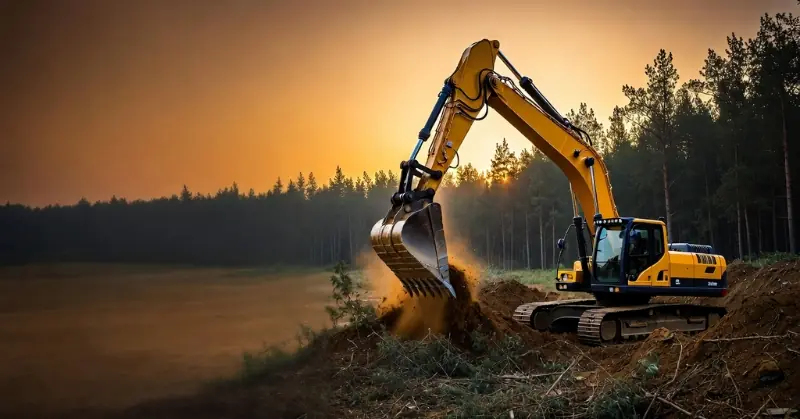
Before we begin the discussion on how to start your land clearing business, it is crucial for us to understand what a land clearing business itself is. When a designated area needs to be cleared for construction, agriculture, or other uses, a land clearing business specializes in removing obstacles like trees, vegetation, rocks, and debris from it.
These companies effectively remove natural barriers to create clear and usable spaces by using heavy machinery such as excavators and bulldozers. Clearing land is necessary for many different types of projects, such as infrastructure projects, environmental restoration projects, and residential and commercial developments.
A land clearing business’s success is dependent on skilled operators, dedication to environmental regulations, and a commitment to efficient, environmentally friendly land transformation.
Read more: 9 Profitable Businesses to Start with $20K
Is a Land Clearing Business Profitable?
Yes, if started and managed correctly, a land clearing business can be highly profitable. The average job can range from $500 to $20,000, depending on acreage, terrain difficulty, and service complexity.
Factors that impact profitability include:
- Regional market demand
- Equipment quality and efficiency
- Number of services offered
- Pricing strategy
- Competition level
Many small operators make $80,000 to $200,000/year, while larger businesses often generate six to seven-figure annual revenue.
Also read: 5 Most Profitable Bloxburg Business Ideas

Skills & Experience You Need
Although formal education isn’t required, certain skills are essential:
- Equipment Operation Skills: Basic knowledge of operating heavy machinery such as excavators, skid steers, bulldozers, chainsaws, and mulchers.
- Safety & Compliance: Understanding OSHA standards, environmental regulations, and safe equipment handling.
- Physical Capability: Land clearing is hands-on work requiring stamina and strength.
- Business Management: Marketing, pricing, scheduling, budgeting, and customer communication skills.
- Optional Certifications: Heavy equipment operator training, forestry mulching training, and chainsaw safety certification. These credentials improve trust and marketability.
9 Easy Steps to Start a Land Clearing Business
Below is a list of steps you need to establish a successful land clearing business. Let’s look at them one by one.
1. Conduct Thorough Research
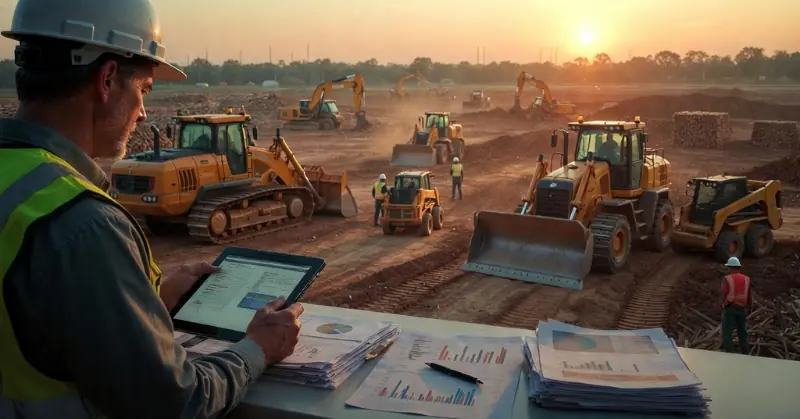
The first step in launching a land clearing business is to conduct research. Starting a land clearing business requires a thorough understanding of the market environment. It is essential to carry out in-depth research to determine potential competitors, assess market demand, and identify industry trends prior to beginning this business.
By researching the specific types of land clearing services in high demand in your target area, you may customize your offerings to meet the needs of the local market.
A crucial component of this research also involves a careful analysis of your competitors. This is essential because it helps enable you to identify the unique selling point that makes your business stand out. In addition to this, an entrepreneur in the land clearing industry needs to understand the regulatory environment.
2. Developing a Business Plan
Creating a strong land clearing business plan is similar to laying the groundwork for a profitable business or start up. To craft a business plan, begin by writing down your objectives for the business, understanding your target market, determining your pricing strategy, the amount you will charge for your services, and your best estimates regarding financial matters (financial projections).
Make an estimate of the equipment and supplies required to clear the land, as well as the initial and ongoing costs. This plan serves as your roadmap, assisting you in making wise choices. It is also a useful document to present to potential investors or lenders. Thus, dedicate some time to organizing everything; you’ll be grateful for it in the end!
3. Obtain Necessary Certifications and Permits
Clearing land necessitates a thorough approach to safety and legal compliance. Because there will be heavy machinery involved along with potential risks, it is critical to put your team’s safety first.
Acquire the necessary licenses and authorizations to conduct operations according to local laws. This includes obtaining permitting clearances to comply with land-use regulations, obtaining licenses for the operation of heavy equipment, and securing environmental permits to minimize ecological impact. Carefully following these legal requirements will protect your company from legal issues while also ensuring the safety of your employees.
Purchasing full insurance coverage is essential, and it must be done in alignment with laws and regulations. Insurance serves as a safety net for your company’s finances, protecting it against possible losses brought on by mishaps or unexpected events.
In addition to reducing potential legal and financial risks, this double dedication to regulatory compliance and risk management builds a strong basis for the long-term, ethical operation of your land clearing company. It also builds client and stakeholder trust.
For example, if you plan to operate in Florida, be aware that land alteration and clearing frequently require Environmental Resource Permits and other approvals when wetlands, surface water, or state-regulated areas are affected. Contact the Florida Department of Environmental Protection (FDEP) or your regional water management district early. They can tell you whether your project is exempt or requires an ERP, mitigation, or wetland coordination.
Municipalities and counties (for example, Martin County or city planning departments) often require local land-clearing or vegetation-removal permits, Preserve Area Management Plans (PAMPs), or an approved building permit before clearing. If your site borders wetlands or navigable waters, the U.S. Army Corps of Engineers may also need to be consulted. Start permit conversations before bidding — permit timing can change project feasibility.
4. Acquiring the Right Equipment
Getting a solid piece of equipment is essential to starting a successful land clearing business. Bulldozers, excavators, forestry mulchers, and wood chippers are examples of essential equipment that are crucial in converting undeveloped land into places that are ready for construction. It is crucial to carefully weigh your options—new and used—while purchasing equipment to ensure that it fits within the limits of your budget.
But the journey doesn’t end with purchase; careful inspections and routine maintenance are essential to an operational lifespan. By following these steps, you can be sure that your equipment is operating at its best. This will avoid unplanned malfunctions and ensure smooth operations. Purchasing dependable machinery and providing careful maintenance is not just a precaution; it is also a key component in your land clearing business’s success.
Typical Equipment Used
- Skid steer with forestry mulcher or brush cutter,
- Compact excavator
- Bulldozer/dozer for heavier ground work
- Forestry mulcher/forestry mower
- Wood chipper
- Stump grinder
- Grapple and winch attachments
- Heavy-duty trailer.
For small projects, start with a skid steer + mulcher + chipper + trailer. These attachments allow you to do brush, small trees, and clean-up work with lower initial capital. Consider renting or leasing the largest items (dozers, big excavators) until you have steady contracts. Renting from reputable rental companies can cut startup capital by tens of thousands and let you bid on larger jobs without owning every machine.
Typical Ballpark Purchase Ranges
- Small skid steer $20k–$45k (used)
- Compact excavator $30k–$80k (used/new)
- Forestry mulcher attachment $8k–$40k
- Wood chipper $5k–$40k
New heavy dozers and large excavators will drive startup costs past $100k. Compare rental rates and calculate rental/day × expected days before buying.
Create a maintenance schedule (daily pre-op checks, weekly greasing, and seasonal major services). Keep a spare critical-parts kit (hydraulic hoses, filters, belts) and a relationship with a local mechanic. Budget 5% to 15% of equipment value annually for maintenance and repairs (it can be higher for older machines). Planned downtime reduces emergency repair costs and keeps quotes realistic.
5. Putting Together a Workforce
Developing a skilled workforce is essential to your land clearing company’s success. Make sure the operators you choose have experience operating heavy machinery and have the necessary expertise to handle the complexities of clearing land. In order to handle the difficulties of compliance, hire people who are knowledgeable about environmental regulations.
It is crucial to provide your staff with ongoing training so they are educated about the latest equipment technologies, safety regulations, and changing industry practices. In addition to improving operational efficiency, your company builds a reputation for excellence and dependability in the highly competitive land clearing services market by cultivating a knowledgeable and competent workforce.
Safety, Training & Insurance Checklist
- Training: OSHA-10/30 construction safety basics, equipment-specific manufacturer training, and in-house toolbox talks weekly. PPE: Hard hats, eye protection, high-vis vests, hearing protection, cut-resistant gloves, and chainsaw chaps for chainsaw crews.
- Insurance: General liability, commercial auto, inland marine (for equipment in transit), workers’ compensation, and pollution liability or environmental impairment coverage if doing wetland work or hauling debris. Compare contractor insurance brokers for custom packages.
- Documentation: Job hazard analyses, equipment pre-op checklists, operator certifications on file, and incident reporting procedures to reduce liability and lower insurance premiums.
6. Develop Marketing Strategies
Investing in a professional website and using social media platforms to effectively showcase your services can help your land clearing business establish a strong online presence. Use Search Engine Optimization (SEO) and other strategic digital marketing tactics to increase online visibility and draw in new customers.
Engage in active networking with nearby builders, contractors, and real estate developers to generate valuable leads and promote cooperative relationships.
Furthermore, attract first-time clients by providing promotional packages or special discounts. This comprehensive strategy contributes to the long-term success and expansion of your land clearing business by increasing your brand’s online visibility and establishing strong ties within your local industry.
Marketing & Client Pipeline Playbook | Practical Steps to Steady Work
- Local builders & developers — attend contractor networking events, offer subcontract pricing, and email-targeted bids for new housing subdivisions.
- Landscape & tree contractors — partner for overflow work (you do heavy clearing, they do finishing).
- Local government & agencies — register as a vendor with county/city procurement and watch bid portals for small-works contracts.
- Homeowners — local SEO (“land clearing near me / lot clearing”) + Nextdoor + Facebook Marketplace ads for lot cleanups and seasonal promotions.
- Referral program — offer discounts for referrals and ask every satisfied customer for a short review & photo before/after.
- Proposal templates — provide clear scope, permitted items, stump removal options, erosion-control plan, and phased pricing so customers can choose incremental services.
7. Adopt Sustainable Practices
Using sustainable land clearing techniques is not only a wise strategic move, but also a necessity in an era where environmental awareness is growing. Take on the challenge by trying out creative solutions like recycling or reusing materials removed from sites.
Think about using eco-friendly practices and reducing your impact on the environment wherever you can. Promoting sustainability helps the business position itself as a responsible player in the market while also aligning with global environmental goals.
You can also look for ways to demonstrate your dedication, such as presenting measurable results or being open and honest with clients about your environmentally friendly projects. Demand for environmentally friendly services rises along with awareness, giving your company a special chance to prosper in an increasingly eco-aware market.
8. Following Safety Measures
Safety is the top priority in the land clearing industry because it determines the business’s longevity and success. Strict safety procedures must be put in place in order to create a safety culture. This involves providing each team member thorough safety training so they are skilled in operating heavy equipment and following the right procedures.
In order to reduce potential risks related to land clearing activities, it is equally important to use Personal Protective Equipment (PPE), such as helmets, gloves, and safety vests, as required. After undergoing initial training, a commitment to safety must be continued and improved.
Update and evaluate safety measures on a regular basis in order to adapt to changing industry standards and laws. Frequent toolbox lectures and safety drills can emphasize how important it is to follow safety procedures.
A land clearing company can reduce the likelihood of accidents and improve its standing as a trustworthy and accountable service provider in a competitive marketplace by promoting a culture that prioritizes the overall wellness of the team.
9. Providing Excellent Customer Services
Long-term success in the highly competitive land clearing industry depends critically on building and preserving a positive reputation. Providing outstanding customer service is the key to establishing this reputation. Transparency and trust are created by effective communication, which guarantees that clients are informed at every stage of the project.
Meeting deadlines for projects demonstrates professionalism and dependability, as well as your dedication to fulfilling client expectations. Responding to client concerns quickly not only solves problems quickly but also demonstrates a commitment to customer satisfaction. The impact of excellent customer service goes beyond the completion of a project. Clients that are happy with your services become your biggest supporters and are likely to refer others to you.
Word-of-mouth recommendations that are based on the satisfaction and trust of previous customers can make a big difference in the gradual growth of your land clearing company. In a sector where trustworthiness and high-quality service are critical, building a reputation for providing outstanding customer service turns into a valuable asset that helps your company grow.
You may also want to read: How to Start a Gift Wrapping Business?
How to Start a Land Clearing Business with No Money?
- Rent Equipment: Rent the big machines per day or week, then subcontract operators or work as a subcontractor to established firms.
- Offer Niche/Low-Capital Services First: start with brush removal, fence-line clearing, lot cleanups, or exotic plant removal — smaller jobs where a skid steer and chipper suffice.
- Partner or Subcontract: team up with an owner-operator who already has equipment and split profits until you can buy gear.
- Rent-to-Own/Finance: Many dealers and finance companies offer rental-credit or lease-purchase options for attachments and mid-size machines.
- Use Client Deposits/Progress Billing: for bigger jobs, collect a deposit so you can cover rental costs without tapping savings.
These tactics reduce upfront capital needs and let you build references and cash flow before investing in heavy machinery.
Read more: How to Start a Laundromat with No Money?
How to Market Your Land Clearing Business?
You can’t establish a successful land clearing business without proper marketing. Here is what you need to do to market your business.

1. Build a Professional Website
Your website should include:
- Service pages
- Before/after photos
- Service area map
- Testimonials
- Contact forms
A well-optimized website increases local visibility.
2. Local SEO Strategy
Most customers search for phrases like:
- “Land clearing near me”
- “Forestry mulching services”
To rank well:
- Verify your Google Business Profile
- Add accurate business information
- Get reviews consistently
- Build local citations (directories, listings)
3. Digital Marketing
- Run Google Ads targeting keywords like “lot clearing service.”
- Promote before/after reels on social media
- Use YouTube for equipment demonstration videos
4. Offline Marketing
- Yard signs and vehicle wraps
- Networking with construction firms
- Partnering with realtors, developers, and farmers
- Attending local contractor trade shows
Traditional methods still outperform digital marketing in construction-related industries.
Challenges You May Face
- High equipment and maintenance costs
- Environmental restrictions on protected land
- Weather-related delays
- Fuel price fluctuations
- Difficulty finding experienced machine operators
Knowing these challenges helps you plan solutions early.
Tips for Running a Successful Land Clearing Business
- Invest in high-quality, efficient machines
- Build partnerships with construction companies
- Offer transparent pricing
- Maintain a safety-first culture
- Keep your online presence updated with fresh work photos
Consistency and professionalism are what help land clearing businesses grow quickly.
Final Thoughts
A combination of industry knowledge, strategic planning, and a dedication to quality is needed when you think about how to start a land clearing business. You can start a profitable and long-lasting land clearing company by carrying out in-depth research, creating a detailed business plan, gaining the required licenses, and putting effective operational procedures in place.
To stand out in a crowded market, concentrate on environmental sustainability, safety, and customer service. Your land clearing business can prosper and support the expansion of the construction sector if you take the appropriate steps.
Frequently Asked Questions (FAQs)
Q: Do I need a license to operate a land clearing business?
A: Yes—most states require a contractor’s license or environmental permits. Requirements vary by region.
Q: What is the cheapest method of clearing land?
A: Depending on the size and vegetation of the area, the least expensive method of clearing land frequently involves manual techniques like hand clearing and controlled burns.
Q: What is the best way to clear land?
A: For large-scale clearing projects, mechanical land clearing with heavy machinery is frequently the most effective and efficient technique.
Q: How much does it cost to start a land clearing business?
A: A land clearing company’s initial costs can range from $50,000 to $150,000, depending on the kind of machinery, licenses, and size of operation.
Q: Can I start with just one machine?
A: Absolutely. Many successful businesses start with a skid steer or excavator and expand over time.
Q: How much can I earn per acre?
A: Clearing an acre usually pays between $1,000 and $4,000, depending on difficulty and vegetation density.
Q: Should I rent or buy equipment?
A: Renting is ideal for beginners; buying is better long-term if you land consistent jobs.
Q: How long does it take to clear an acre?
A: Typically 3–8 hours, depending on terrain, tools, and crew size.
Q: Is forestry mulching profitable?
A: Yes, forestry mulching is one of the fastest-growing services because it’s eco-friendly and requires fewer steps.
Q: How do I find clients fast?
A: Use Google Business Profile, local ads, construction networking, and before/after visuals.