
Selling tumblers has exploded from a side hustle into a full‑time business for thousands of creators. But if you have ever felt confused about which tumblers actually sell, how to price them, or whether the market is already saturated, you are not alone.
This comprehensive guide on how to make money selling tumblers is designed to remove the guesswork.
Instead of vague advice, you will get a clear, practical roadmap — from choosing profitable tumbler types and sourcing affordable materials to pricing correctly, designing confidently, and attracting consistent customers.
Whether you are starting from scratch or trying to fix slow sales, this guide is designed to help you make informed, profitable decisions.
Are Tumblers Profitable in 2026?
Yes — tumblers are still profitable, but only when you treat them like a business, not just a craft. Here is why tumblers continue to make money:
- High perceived value (customers expect to pay $20-$45)
- Low raw material cost (often $5-$10 per unit)
- Strong demand for personalization
- Repeat purchases for gifts, events, and businesses
Real-World Example: Many Etsy sellers report net profits of $8-$25 per tumbler, depending on customization level. Even selling just 10 tumblers a week at a $15 profit equals around $600/month from a small home setup.
Profitability depends on niche selection, pricing discipline, and marketing, not luck.
Read more: Top 5 Profitable Bloxburg Business Ideas
Are Tumblers Still in Demand?
Absolutely. Tumblers aren’t a fad — they have become a daily‑use lifestyle product. People buy tumblers for:
- Coffee and hydration habits
- Gifts (birthdays, weddings, teacher gifts)
- Branding (small businesses, gyms, realtors)
- Events (bridal parties, corporate giveaways)

Why People Like Tumblers So Much?
Here are top reasons behind this fact.
- Temperature retention (hot stays hot, cold stays cold)
- Reusable and eco‑friendly
- Personalized designs feel unique
- Social media visibility (especially TikTok, Facebook, and Instagram)
The tumbler market continues to grow alongside personalization and creator‑led commerce.
What Type of Tumblers Sell Best?
One of the biggest beginner mistakes is trying to sell everything. Profitable sellers focus on tumblers with proven demand, manageable production time, and strong personalization appeal, then expand once they understand their audience and workflow.
The best-selling tumblers usually share three traits:
- They solve an everyday problem (hydration, coffee, travel)
- They look premium, even at higher prices
- They allow customization (names, quotes, roles, or events)
Most profitable tumbler types are as follows.
1. Stainless Steel Sublimation Tumblers
- Best option for beginners
- Durable, lightweight, and widely accepted
- Fast production with minimal mess
- Ideal for text, photos, logos, and full‑wrap designs
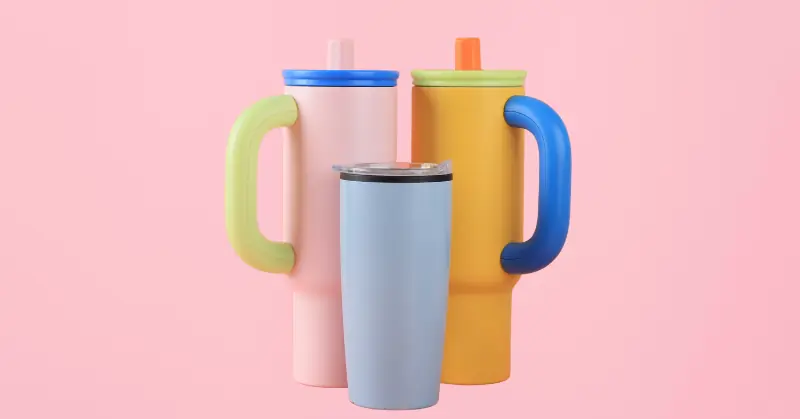
2. 40oz Handle Tumblers (Stanley-Style)
- Extremely popular and trend‑driven
- Higher perceived value and pricing ($35-$55)
- Great for lifestyle, fitness, and mom audiences
3. Glitter and Epoxy Tumblers
- Premium, handmade appearance
- Higher profit per unit
- Time‑intensive, better once you have mastered basics
4. Themed & Niche Tumblers
- Teacher, nurse, mom, pet, gym, faith‑based niches
- Easier to market because messaging is specific
- Less price competition than generic designs
What Tumbler Size Is Most Popular?
- 20 oz: Best overall seller (affordable, gift‑friendly, easy to ship)
- 30 oz: Popular for work and travel
- 40 oz: Trending for lifestyle and hydration content
If you are starting out, 20 oz sublimation tumblers offer the best balance of cost, demand, production speed, and beginner‑friendly learning curve.
Also read: Pros and Cons of Selling Feet Pic
How Much Does It Cost to Start a Cup Business?
One of the biggest misconceptions is that you need a large upfront investment. In reality, you can start a cup business lean and scalable, upgrading equipment only after you validate real customer demand.
Your total startup cost depends on the production method you choose (sublimation, epoxy, or vinyl) and whether you are starting as a small side hustle or planning faster growth.
Basic Startup Cost Breakdown
| Item | Estimated Cost |
| Sublimation Tumblers (10-20 units) | $80-$150 |
| Sublimation Printer | $250-$500 |
| Heat Press or Tumbler Press | $150-$300 |
| Design Software | $0-$15/month |
| Packaging & Shipping Supplies | $50 |
Estimated Startup range: $500-$1,000
How Beginners Can Start Cheaper?
If you are planning to sell tumblers for the very first time, you can:
- Start with one tumbler size and one style instead of multiple variations
- Use free tools like Canva before upgrading to paid software
- Buy blanks in small quantities to avoid dead inventory
- Reinvest early profits rather than overspending upfront
You can reduce costs further by starting with print‑on‑demand testing or taking pre‑orders before committing to bulk orders.
How to Price Tumblers Correctly?
Pricing is where most sellers fail. Let’s look at an effective and simple tumbler pricing formula.
(Material Cost + Labor + Fees + Shipping) × 2.5–3 = Retail Price
Example
- Tumbler blank: $6
- Ink, wrap, packaging: $3
- Labor: $7
- Etsy fees & shipping buffer: $4
Total Cost = $20
Retail Price = $35-$45
This ensures profit and sustainability.
Wondering, “Why are tumblers so expensive?” Well, customers aren’t only paying for the cup — they are paying for:
- Customization
- Time
- Skill
- Emotional value (gift‑ready)
Where to Buy Quality Tumblers & Supplies?
Reliable sourcing is critical — poor‑quality blanks or materials lead to faded prints, peeling designs, refunds, and negative reviews. Successful sellers test suppliers carefully and stick with vendors that offer consistency, fair pricing, and business‑friendly shipping.
Trusted Tumbler Blank Suppliers
The suppliers below are widely used by professional tumbler sellers:
- MakerFlo: High‑quality sublimation and specialty tumblers, consistent coatings, bulk pricing options
- JDS Industries: Reliable stainless steel blanks, fast U.S. shipping, good for scaling
- Heat Transfer Warehouse: Strong for sublimation tumblers, wraps, and presses
- Stainless Depot: Budget‑friendly options for beginners and testing designs
These vendors are ideal if you want predictable results and fewer production issues.
Craft Supply & Retail Stores
Local and big‑box stores are useful for testing or quick restocks:
- Hobby Lobby: Yes, they sell tumblers (selection is limited and seasonal)
- Michaels: Good for vinyl, tools, and beginner supplies
- Amazon: Convenient, but always check reviews and coating compatibility
Retail stores are best for small batches, not long‑term scaling.
Other Essential Supplies to Source
Beyond the tumbler itself, quality materials matter:
- Sublimation paper & ink
- Vinyl, glitter, or epoxy (if applicable)
- Heat‑resistant tape
- Boxes, bubble wrap, and gift packaging
Pro Tip: Always order one test unit before bulk purchases and run a full production test to check color vibrancy, durability, and finish quality.
You may also want to read: How to Buy a Business With No Money?
Learning the Design and Production Process
You don’t need a design degree or prior crafting background to start selling tumblers. Many successful sellers began with zero experience and learned by focusing on one simple method, repeating it consistently, and improving with each order.
The biggest mistake beginners make is trying to master every technique at once. Instead, aim for clean execution, repeatability, and quality control. Customers care more about a straight design and durable finish than complex effects.
Simplest Production Method for Beginners
Sublimation printing is the most beginner-friendly option:
- Choose or create a simple design (text-based or full-wrap)
- Print with sublimation ink and paper
- Wrap and tape the design tightly around the tumbler
- Heat press for 45-60 seconds using a tumbler press or oven
- Let it cool, inspect for flaws, and package
There is no epoxy curing time, minimal mess, and faster turnaround — making sublimation ideal for beginners and small home setups.
Beginner Design Tips That Actually Sell
- Start with clean fonts and minimal layouts
- Focus on personalization: names, job titles, dates, or quotes
- Use high-contrast colors for readability
- Test one design style before creating multiple variations
Free tools like Canva are more than enough to start, and many profitable sellers built their first listings using basic templates and simple text designs.
Can You Really Make Money Selling Tumblers on Etsy?
Yes — but only if you treat Etsy like a search engine, not a social platform. Etsy rewards sellers who understand buyer intent, not just design creativity.
Shoppers typically arrive with a clear goal (a teacher gift, a bridal tumbler, a nurse cup), so listings that speak directly to a specific audience convert far better than generic designs.
What Actually Works on Etsy?
- Niche-specific listings (not generic “custom tumbler”)
- SEO-optimized titles, tags, and descriptions
- Lifestyle photos that show real-world use
- Clear personalization instructions and fast response times
Sellers who succeed on Etsy usually focus on one niche first, build social proof through reviews, and then expand their product range gradually.
Is selling mugs still profitable? Yes, but tumblers outperform mugs in price, durability, and shipping safety — making them a better long-term product for most Etsy sellers.
Read more: How to Make Money on Pinterest Without a Blog?
How to Get Consistent Customers?
Consistent customers are the backbone of a sustainable tumbler business. Relying solely on Etsy can leave your revenue unpredictable, so diversification is key.
Proven Strategies to Build Steady Sales
- Social Media Marketing: Use TikTok and Instagram Reels to showcase your design process, behind-the-scenes clips, and customer testimonials. Short, engaging videos often go viral and attract new buyers.
- Email & Community Lists: Collect emails through your website or local events to notify customers about new designs, promotions, or restocks.
- Local Markets & Pop-Ups: Sell at craft fairs, farmers’ markets, and school events to reach buyers who prefer hands-on experiences.
- Bulk Orders & Partnerships: Offer tumblers to local businesses, schools, gyms, and clubs. Bulk sales reduce marketing costs and provide recurring revenue.
- Referral Programs: Encourage satisfied customers to refer friends or family with discounts or freebies.
Real-Life Example: One TikTok video from a small seller resulted in 300 orders in 48 hours without any paid ads. Consistent posting and showcasing personalization options keep the sales rolling over time.
Focusing on multiple channels ensures that if one platform dips in traffic or sales, others can compensate, creating predictable, long-term income.
Also read: How Do Bail Bondsmen Make Money?
Are Tumblers Street Legal?
Yes, selling tumblers is legal in most areas, but many beginners misunderstand what “legal” actually means in this context.
Tumblers themselves aren’t regulated products, so there is no special license just for selling cups. However, you do need to follow basic business and intellectual property rules.
What You Should Check Before Selling?
- Business Registration: Some states or cities require a small business license or DBA, especially if you sell locally or at markets.
- Sales Tax Compliance: Online platforms like Etsy may collect tax for you, but off-platform sales usually require you to handle it yourself.
- Copyright & Trademarks: You cannot legally sell tumblers with copyrighted characters, logos, or brand names (Disney, sports teams, celebrities) unless you have proper licensing.
- Product Safety Claims: Avoid making claims like “BPA-free” or “food-safe” unless your blanks are certified and documented.
Best Practice: Stick to original designs, text-based personalization, and licensed commercial-use graphics. This keeps your business safe, professional, and scalable.
How Big Is the Tumbler Market?
The tumbler market is part of the larger global drinkware industry, which has been expanding steadily due to changing consumer habits. More people are investing in reusable drinkware as they focus on sustainability, health, and everyday convenience.
Within that broader market, custom and insulated tumblers are one of the fastest-growing segments. Demand is fueled by:
- Eco-friendly and reusable product trends
- Rising interest in personalized gifts
- Corporate branding and promotional products
- Social media-driven lifestyle trends
For small sellers, this matters because growth isn’t limited to one platform or season. Tumblers sell year-round — holidays, events, fitness trends, back-to-school, and corporate gifting all create recurring demand.
The Takeaway: The current market is large enough to support new sellers, but success depends on niche focus and differentiation, not trying to compete with mass-produced brands.
How to Run a Successful Tumbler Business Long-Term?
Long‑term success comes from building systems, not just chasing short‑term sales. Many sellers make good money early on but struggle to scale because they lack structure and consistency behind the scenes.
To run a sustainable tumbler business, focus on:
- Niche Authority: Become known for one specific style or audience before expanding
- Standardized Processes: Use repeatable workflows for design, production, and packaging to save time
- Cost Tracking: Monitor material costs, fees, and labor so profits don’t slowly disappear
- Customer Experience: Fast communication, accurate personalization, and reliable shipping lead to repeat buyers
- Gradual Scaling: Add new tumbler sizes, designs, or equipment only when demand supports it
Most profitable sellers don’t sell the most designs — they sell the right designs consistently, backed by reliable systems and strong customer trust.
Read more: How to Start a Laundromat Business With No Money?
Common Challenges (And How to Overcome Them)
- High Competition: Niche down and brand yourself
- Price Undercutting: Focus on quality and service
- Customer Customization Errors: Always confirm spelling and proofs
- Shipping Damage: Use protective packaging and insurance
How to Scale and Grow Your Tumbler Business?
- Buy supplies in bulk
- Offer wholesale pricing
- Introduce bundle deals
- Expand into matching products (mugs, water bottles)
- Build an email list or repeat customer base
Scaling is about systems, not just more sales.
Final Thoughts: Is Selling Tumblers Worth It?
Selling tumblers isn’t about chasing trends or copying what everyone else is doing — it is about building a simple, repeatable business around products people already love and use every day.
If you approach it with the right mindset, selling tumblers can absolutely become a steady and rewarding income stream, whether as a side hustle or a full-time business.
The formula is straightforward:
- Choose tumblers with proven demand
- Price based on profit, not guesswork
- Master one production method before expanding
- Market with intention, not randomness
Start small, stay consistent, and improve with every order. If you follow the roadmap in this guide, you won’t just make money selling tumblers — you will build a business that lasts.
FAQs
Q: Is a tumbler business good for beginners with no crafting experience?
A: Yes. Sublimation tumblers are especially beginner-friendly and require minimal crafting experience. With practice and attention to quality, beginners can quickly create professional-looking products.
Q: Are tumblers profitable for small businesses?
A: Yes, tumblers can be very profitable for small businesses when priced correctly. Most sellers spend $5-$10 on materials and sell finished tumblers for $20-$45, leaving room for healthy profit margins. Profitability depends on niche selection, efficient production, and consistent marketing rather than volume alone.
Q: Why are custom tumblers so expensive?
A: Custom tumblers are priced higher because customers pay for personalization, design time, production labor, and gift-ready presentation — not just the cup itself. Handcrafted and custom items also carry higher perceived value.
Q: Are tumblers still trending on social media?
A: Yes, tumblers remain popular on platforms like TikTok and Instagram, especially personalized, aesthetic, and process-based videos. Behind-the-scenes clips, custom name reveals, and bulk order packing videos often perform well.
Q: Can I sell tumblers locally instead of online?
A: Absolutely. Many sellers do very well selling tumblers at craft fairs, farmers’ markets, school events, and through word-of-mouth. Local selling often reduces competition and shipping costs while building strong customer relationships.
Q: How long does it take to start making money selling tumblers?
A: Some sellers make their first sale within days or weeks, especially through local markets or social media. Building consistent income usually takes a few months of testing designs, improving listings, and refining marketing strategies.


