
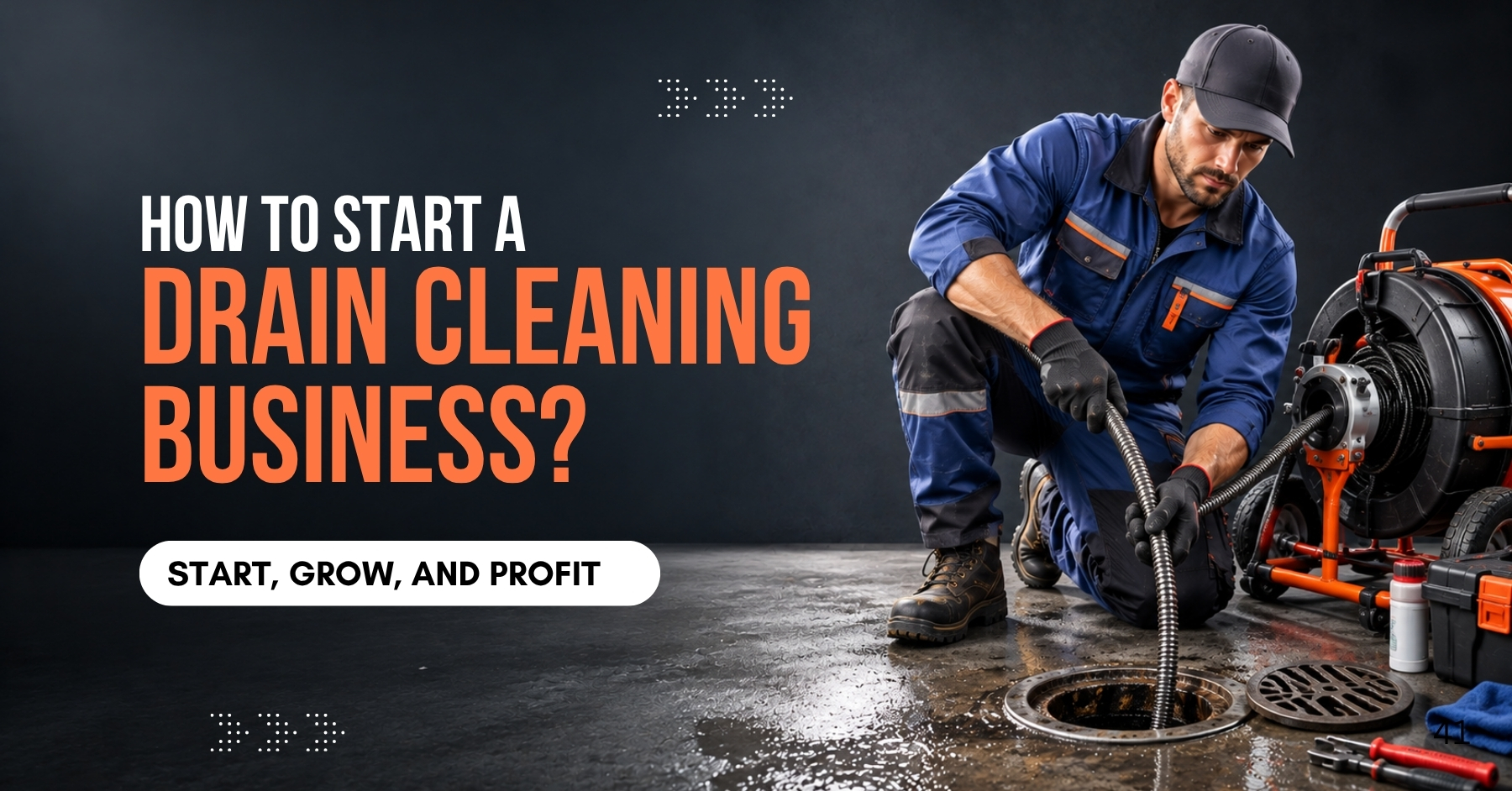
Starting a drain cleaning business can be one of the smartest decisions for anyone looking to enter a high-demand, essential service industry with strong profit potential.
Clogged drains, sewer backups, and slow pipes are problems homeowners and businesses can’t ignore — and they are willing to pay for fast, professional solutions. Yet for beginners, the path to launching a successful drain cleaning business often feels overwhelming.
Questions about startup costs, required equipment, pricing, licensing, technical skills, and customer acquisition can quickly create doubt.
This guide is designed to remove that uncertainty. Whether you are exploring how to start a drain cleaning business, wondering if a drain cleaning business is profitable, or looking for proven ways to attract customers and price your services correctly, this article provides a clear, realistic roadmap.
Drawing from industry best practices, real-world examples, and insights from established drain cleaning professionals, you will learn exactly what it takes to start, operate, and grow a trustworthy, profitable drain cleaning business — without costly mistakes or unnecessary risks.
Summary: Starting a drain cleaning business can be profitable with the right equipment, licensing, pricing, marketing, and customer service. This guide covers startup costs, required tools, earning potential, business setup, growth strategies, technology, pricing transparency, and practical tips for building a successful drain cleaning business.
What Is a Drain Cleaning Business?
A drain cleaning business provides professional services to diagnose, clear, and prevent blockages in residential, commercial, and industrial drainage systems.
These businesses focus specifically on drains and sewer lines rather than full-scale plumbing repairs, making them specialists in handling clogs, backups, slow drains, grease buildup, tree root intrusions, and recurring drainage issues.
Typical services include unclogging kitchen and bathroom drains, clearing toilet and floor drains, cleaning main sewer lines, performing hydro-jetting for heavy buildup, and using inspection cameras to identify hidden problems inside pipes.
Many drain cleaning businesses also offer preventive maintenance plans for homeowners, landlords, restaurants, and property managers to reduce future emergencies and costly repairs.
Because drain issues often require urgent attention, this business operates in a high-demand, essential service niche.
Customers value fast response times, accurate diagnosis, and transparent pricing — qualities that allow well-run drain cleaning businesses to build strong trust, repeat clients, and steady income without relying solely on one-time jobs.
Why Start a Drain Cleaning Business?
Is drain cleaning a good business? Yes, demand is consistent because clogs and drain issues happen year-round, often unexpectedly. Plumbing services are essential, making this business recession-resilient.
Starting a drain cleaning business offers a unique combination of steady demand, strong profit margins, and long-term growth potential. Drain and sewer problems aren’t optional repairs — when a drain backs up, customers need immediate professional help, regardless of the season or economic conditions.
Consistent, Year-Round Demand
- Clogged drains, grease buildup, tree roots, and sewer backups happen every day in homes and businesses.
- Drain cleaning is an essential service, making it less affected by economic downturns.
- Emergency calls, especially after heavy rain or holidays, create high-value job opportunities.
Attractive Profitability
- Many drain cleaning jobs take 1-2 hours but generate $150-$800+ per service call, depending on complexity.
- Specialized services like hydro-jetting and camera inspections allow premium pricing.
- With proper pricing and low overhead, profit margins can exceed 50-60%.
Lower Barrier to Entry Compared to Full Plumbing
- You don’t need to master all plumbing repairs to start — drain cleaning focuses on a specific, learnable skill set.
- Beginners can start with essential tools and upgrade equipment as the business grows.
- Training and certification options are widely available, even for those new to the trade.
Scalable Business Opportunities
- Easy to expand into sewer cleaning, preventive maintenance contracts, and commercial services.
- Strong potential for repeat customers and recurring revenue from property managers and restaurants.
- A well-run drain cleaning business can later be sold as a drain cleaning business for sale, adding long-term value.
You can also use our Business Valuation Calculator to estimate your business’s value.
Real-World Perspective: Many successful operators start as solo technicians and scale into multi-truck operations within a few years by combining reliable service, smart pricing, and local marketing. This makes drain cleaning not just a job — but a scalable, long-term business opportunity.
Read more: Why Start a Land Clearing Business?
Startup Costs and Equipment You Need
The hardest early decisions revolve around equipment investment. Too little gear means turning away good jobs — too much gear strains cash flow.
Typical Startup Cost Breakdown
The table below shows the costs of the equipment you need to run a successful drain-cleaning business.
| Item | Typical Cost |
| Vehicle (Van/Truck) | $15,000-$50,000 |
| Basic drain snake & auger tools | $500-$2,000 |
| Heavy-duty cable machine | $2,000-$5,000 |
| Hydro-jetter | $3,000-$10,000+ |
| Sewer inspection camera | $4,000-$12,000 |
| Licensing & permits | $500-$2,000 |
| Insurance (liability) | $1,000-$5,000/year |
| Marketing & branding | $1,000-$5,000 |
Typical total startup investment: $25,000-$60,000+, depending on equipment choices and market.
Essential Tools to Start
- Drain snakes & handheld augers
- Electric drum machines
- Hydro-jetting system (critical for heavy blockages)
- Sewer line inspection camera
- Safety gear (gloves, boots, eye protection)
Tip: You can start with basic equipment and add the costly tools (like cameras and hydro-jetters) as you grow for better profitability.
Licenses, Certification & Qualifications
Running a professional drain cleaning business requires more than just tools — it also involves meeting legal requirements, maintaining safety standards, and building customer trust through proper qualifications.
While licensing rules vary by state and country, understanding these requirements early helps you avoid fines, rejected jobs, or legal issues later.
Business Licenses & Legal Requirements
Wondering what license do you need and what the legal requirements are to start this business? Here is what you should know:
- A business licenses or permits may be required depending on your location and business activities.
- Some states or municipalities require a plumbing or drain cleaning contractor license, especially for sewer and main line work.
- You may need to register your business as an LLC or sole proprietorship and obtain a tax ID (EIN).
- Always check local and state regulations, as requirements differ significantly.
Also read: What Licenses Are Required to Start a Cleaning Business?
Insurance & Compliance
- General liability insurance is essential to protect against property damage or accidental injuries.
- Workers’ compensation insurance is required if you hire employees.
- Compliance with local health, safety, and environmental regulations helps protect both workers and customers.
Professional Certifications (Optional but Highly Valuable)
- Certifications such as Certified Drainlayer or plumbing trade certifications improve credibility.
- Manufacturer training for hydro-jetters and camera inspection tools helps ensure safe, effective use.
- Certification can help justify higher pricing and improve customer confidence.
Skills & Practical Experience
- Strong diagnostic skills are needed to identify different types of blockages (grease, roots, debris).
- Hands-on training through apprenticeships, trade schools, or on-the-job learning is highly recommended.
- Knowing how to safely operate drain snakes, jetters, and inspection cameras reduces risks and costly mistakes.
Tip: Even if not legally required, a trade school or an apprenticeship helps you gain hands-on skills and credibility.
Why Qualifications Matter?
Customers are more likely to trust — and pay premium rates to — licensed and insured professionals. Clear qualifications also help reduce disputes, support transparent pricing, and position your business as reliable and professional in a competitive market.
How Much Do Drain Cleaners Make?
Searching for typical pricing benchmarks? Here is what customers typically pay for professional drain services:
- Kitchen sink unclogging: $175-$450
- Bathroom sink/toilet: $150-$450
- Shower/tub: $200-$500
- Main sewer lines: $350-$800+
- Hydro-jetting: $400-$1,000+
- Camera inspection: $295-$350+
How much should I charge for 2 hours of cleaning? Pricing depends on the local market and complexity. A simple flat rate plus a time/material model works well — but many successful businesses use tiered pricing, charging more for difficult or emergency jobs.
Income Expectations
- Starting drain cleaners might earn $30,000-$50,000/year initially.
- With experience, good marketing, and business systems, owners commonly exceed $75,000-$100,000+ annually.
- Skilled plumbers focusing on drain work can earn $100k-$150k+ as technicians in established companies.
How to Start a Drain Cleaning Business?
Starting a drain cleaning business is not complicated, but it does require careful planning and smart decision-making. Following a structured, step-by-step approach helps you control costs, avoid legal issues, and build a strong foundation for long-term profitability.
Step 1: Research Your Local Market
- Analyze local competitors and note their pricing, services, and customer reviews.
- Identify gaps such as slow response times, lack of emergency service, or poor communication.
- Understand customer demand in residential, commercial, or mixed markets.
Step 2: Create a Drain Cleaning Business Plan
- Outline startup costs, equipment needs, and monthly expenses.
- Define your service offerings (basic unclogging, sewer cleaning, hydro-jetting, inspections).
- Set short-term and long-term revenue goals.
- A simple business plan keeps you focused and helps if you seek financing later.
Step 3: Register Your Business & Handle Legal Setup
- Choose a business structure (LLC is common for liability protection).
- Register your business name and obtain the required licenses and permits.
- Apply for a tax ID (EIN) and open a business bank account.
- Secure liability insurance before accepting your first job.
Step 4: Invest in Essential Equipment
- Start with core tools like drain snakes, augers, and safety gear.
- Purchase advanced equipment (jetters, cameras) once cash flow improves.
- Consider renting or leasing high-cost tools initially to reduce upfront risk.
Step 5: Set Your Pricing Strategy
- Use flat-rate pricing for common drain issues to keep pricing transparent.
- Factor in travel time, equipment wear, labor, and emergency call-outs.
- Avoid underpricing — customers value reliability and professionalism over the cheapest option.
Step 6: Build Your Online & Local Presence
- Create a simple website optimized for local SEO and service keywords.
- Set up and optimize your Google Business Profile for local visibility.
- Collect reviews from early customers to build credibility quickly.
Step 7: Prepare for Real-World Jobs
- Develop a clear intake process for emergency calls.
- Communicate pricing and expectations before starting work.
- Follow safety procedures and leave the job site clean and professional.
By following these steps, you’ll reduce startup mistakes, gain customer trust faster, and position your drain cleaning business for steady growth from day one.
You may also want to read: How to Start a Concrete Business?
Marketing & Growing Your Drain Cleaning Business
Let’s now understand how you can market and grow your business.
Best Marketing Strategies for Drain Cleaning Businesses
Marketing a drain cleaning business doesn’t require a massive budget — it requires local visibility, trust, and quick response. Since most customers search when they have an urgent problem, your goal is to show up fast and look reliable.
1. Local SEO Optimization
Local SEO is one of the most cost-effective marketing strategies for a drain cleaning business, especially for beginners. Start by creating and optimizing your Google Business Profile:
- Use your exact business name, address, and phone number
- Select categories like Drain Cleaning Service or Sewer & Drain Cleaning
- Add real photos of your truck, equipment, and completed jobs
- List all your services clearly (sink drains, main line cleaning, emergency service)
Next, optimize your website for local keywords such as:
- “Drain cleaning near me”
- “Emergency drain cleaning in [your city]”
- “Sewer and drain cleaning [ your location]”
Publishing helpful content (FAQs, pricing explanations, prevention tips) also improves SEO for drain cleaning businesses and builds trust with both customers and search engines.
Why It Works?
Many drain cleaning businesses get the majority of their calls directly from Google Maps listings.
2. Google Ads & PPC
Google Ads and Pay-Per-Click (PPC) campaigns are extremely effective because drain cleaning is an urgent service.
Focus your ads on:
- Emergency drain cleaning
- Same-day service
- Main sewer line clogs
Best practices:
- Target only your service area to avoid wasted spend
- Run ads during peak hours (evenings and weekends)
- Use call-only ads so customers can contact you instantly
Even a small budget can generate strong returns when set up correctly. Many owners report closing one job that pays for an entire month of ads.
Tip: Combine PPC with Local Services Ads for better visibility and trust signals.
3. Social Proof & Reviews
People trust other customers more than ads — especially when dealing with messy, stressful drain problems.
How to build strong social proof:
- Ask every satisfied customer for a Google review
- Send a review link by text after completing the job
- Respond professionally to both positive and negative reviews
Encourage customers to mention:
- The specific problem you solved
- Your response time
- Professionalism and cleanliness
Showcase reviews on:
- Your website
- Google Business Profile
- Social media pages
Strong reviews directly improve local SEO, ad conversions, and pricing confidence.
4. Referral Programs
Referral programs are a simple but powerful way to grow without heavy advertising costs. Effective referral ideas are as follows.
- $25-$50 discount for customers who refer a friend
- Small cash or gift card rewards
- Discounts for property managers or real estate agents
Ideal referral partners include:
- Landlords
- Property managers
- Restaurants
- Home inspectors
- Plumbers who don’t offer drain cleaning
Word-of-mouth remains one of the most reliable drain cleaning business opportunities, especially in local markets.
A good strategy is a landing page + call-to-action forms. This boosts lead quality from ads instead of sending ads to a homepage.
How to Grow a Sewer and Drain Cleaning Business?
- Offer preventive maintenance contracts
- Add complementary services (septic cleaning, plumbing repairs)
- Partner with local plumbers and property managers
- Invest in technology like inspection cameras so you can charge premium prices
You can also explore another home-service opportunity in our guide on how to start a gutter cleaning business.
How Technology Can Help Run a Drain Cleaning Business
Technology can make it easier to manage a drain cleaning business as the number of customers and jobs increases. You do not need expensive software when starting, but simple digital tools can help reduce paperwork and keep jobs organized.
Manage Scheduling and Jobs
Scheduling software can help you keep track of appointments, assign jobs, and update your schedule when an emergency call comes in. If you have multiple technicians, dispatching tools can also help you see which technician is available and assign jobs accordingly. Some field service systems also keep customer information, job history, estimates, and service details in one place.
Automate Customer Follow-Ups
You can also automate some routine communication. Appointment reminders can help reduce missed appointments, while digital invoices and payment reminders can make it easier to collect payments after a job. If you offer recurring drain cleaning or maintenance services, software can help you keep track of future visits and follow-ups. Some systems can also send review requests after completed jobs.
Use AI for Simple Administrative Tasks
AI can help with some basic administrative work, such as drafting customer responses or answering common questions. This can save time on repetitive tasks, but important customer, pricing, and service decisions should still be reviewed by a person.
The goal is not to automate everything. It is to spend less time on scheduling, paperwork, and routine follow-ups so you have more time to focus on the actual drain cleaning work and your customers.
How to Handle Customer Expectations?
Want to handle customer expectations effectively? Here is how you can do it:
- High Cost of Tools: Start small, lease equipment as needed, and reinvest profits into growth.
- Technical Skills: Apprenticeships and trade school training build confidence and credibility.
- Pricing Disputes: Use transparent pricing sheets; explain why advanced tools cost more.
- Emergency Calls: Consider offering emergency rates that reflect rapid response value.
Real-World Example: Pricing Transparency
A homeowner calls for a kitchen sink clog. After inspection, you determine a basic clog:
- Flat rate: $250
- Huge grease build-up requiring hydro-jet: +$300
- Camera inspection before work: +$300
These are example prices; actual costs vary by location, labor, equipment, and job.
Clear communication up-front prevents surprises and builds loyalty.
Summing Up
Starting a drain cleaning business offers a profitable, in-demand service for those willing to plan carefully and invest in the right skills and tools.
By understanding how to start a drain cleaning business, setting fair pricing, handling emergencies professionally, and using effective marketing strategies like local SEO and digital advertising, beginners can attract steady clients and grow their income.
Addressing common challenges (such as equipment costs, technical skills, and customer expectations) ensures your business is trusted, reliable, and positioned for long-term success. With preparation and consistency, a drain cleaning business can be a rewarding, scalable venture.
FAQs
Q: How much do people charge for drain cleaning?
A: Typical prices range from $150 to $800+ per job, depending on the drain type, severity of the clog, and equipment needed.
Q: How much does it cost to clear a clog?
A: For most residential clogs, expect $150-$500, while complex or commercial blockages can cost $400-$800+.
Q: Is professional drain cleaning worth it?
A: Yes, professionals prevent recurring clogs, avoid pipe damage, and save time and frustration, making the service cost-effective in the long run.
Q: How hard is it to start a drain cleaning business?
A: It is moderate. You need basic equipment, technical skills, licensing, and marketing, but with planning and training, beginners can launch successfully and scale over time.


